


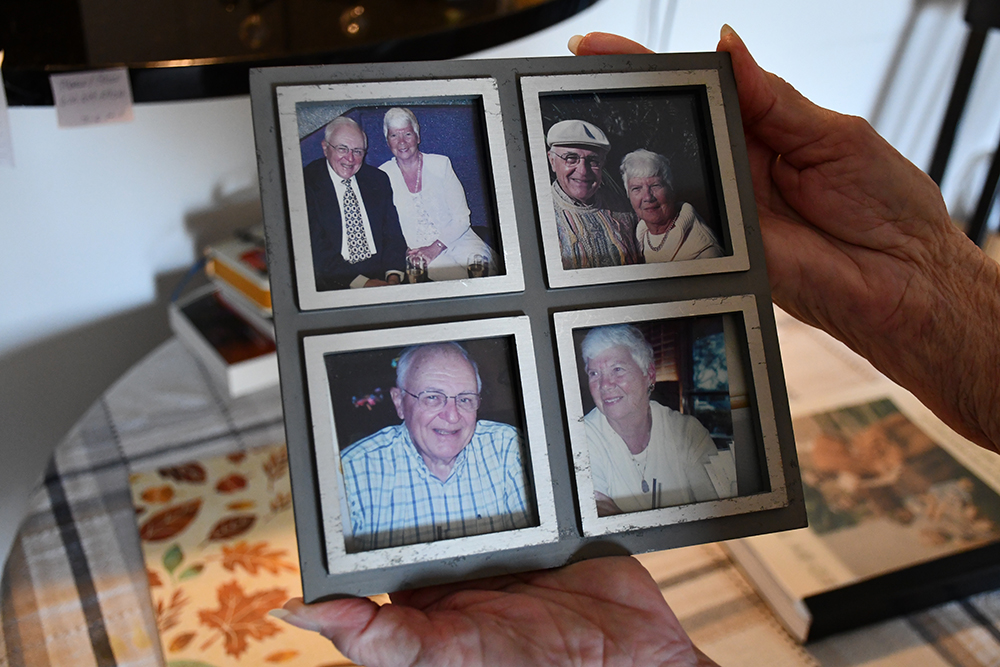
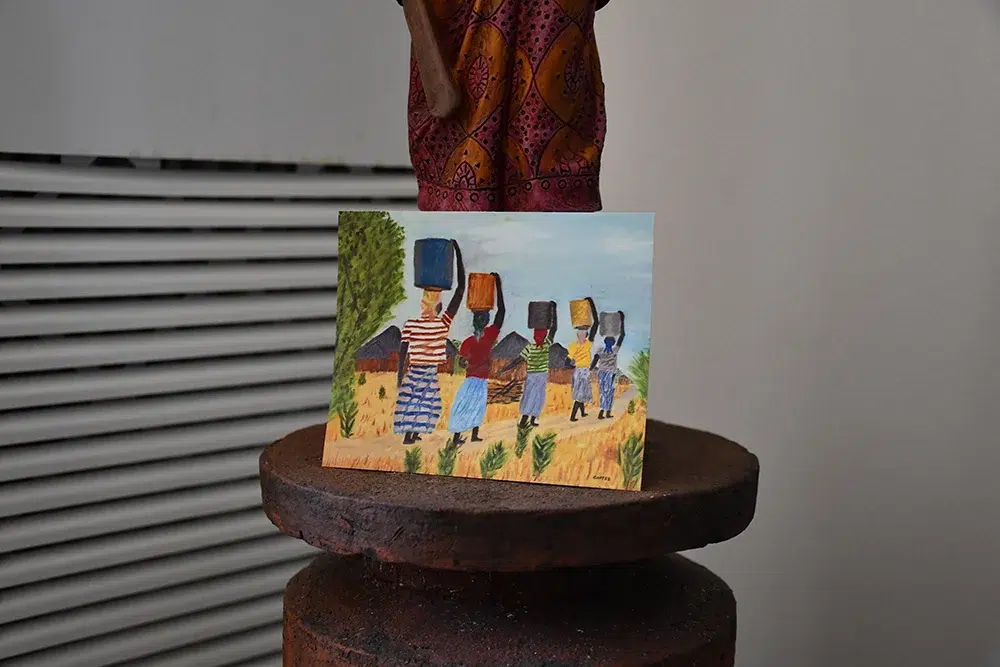
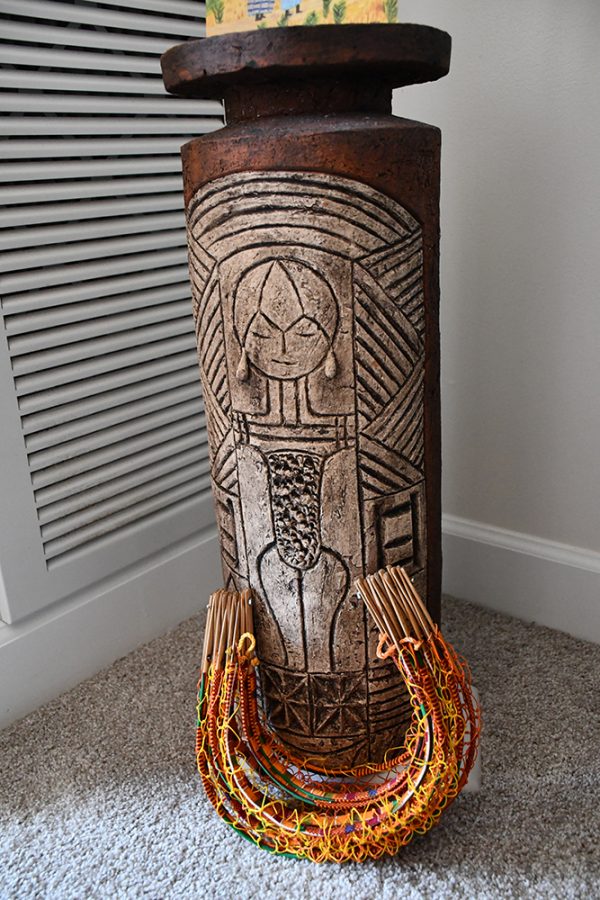
Alice Moser was always a religious individual. Growing up in small-town Milton, Pennsylvania, with her three brothers, Alice and her family were avid members of the United Church of Christ.
“They spoiled me rotten as the baby of the family,” she recalls fondly. With a positive schooling experience and loving siblings, Alice’s childhood was a happy one. She was a cheerleader, a party girl, and an involved student.
It was during her high school career that she met Ned, her future husband. Ned was a more disciplined and analytical student whose parents wanted him to become a pastor. Despite their differing personalities, Alice and Ned hit it off immediately. In many ways, Ned was the “yin” to Alice’s “yang.”
“Could I really be a missionary’s wife?” Alice had asked herself. The answer to that question turned out to be a resounding “yes” as the two quickly became high school sweethearts.
After graduating, Alice held various jobs. She was a dental technician at one time, performing dental procedures and taking X-rays. She also did some bookkeeping work. Both of these skills would come back in unexpected ways later in her life.
Alice considered higher education at one point but says she was “much too in love to do that.”
“[College] wasn’t for me. I wanted to be a wife and a mother,” says Alice.
Ned, meanwhile, had his sights set on medicine and decided to pursue a medical degree. Within a week of completing his undergraduate education, Ned married Alice. After much consideration, Alice had decided that she loved Ned enough to follow him and his life wherever it led. Little did she know where this would lead them.
Not long after settling down and having two children of their own, Alice and Ned were commissioned as medical missionaries by their church in 1955. Their first location assignment was London. With their nine-month and one-year-old children in tow, they traveled to the U.K.
“We had our children with us at all times,” says Alice. The family shared a close bond, and their missionary work would not get in the way of that. The children always followed Alice and Ned, even if it meant sacrificing some semblance of a “normal” childhood.
In addition to performing medical missionary duties, the family were stationed in London as a sort of “jumping-off point” for the family’s next adventure: Africa. Ned’s primary responsibility in London was to earn a degree in tropical medicine to help him address regional medical needs.
Scheduled to remain in the U.K. for six months, the Moser family experienced many new lifestyle quirks that made their stay all the more interesting. For one, the family didn’t have a typical refrigerator. Instead, they had a larder – a cold room for storing perishable foods.
Learning British slang was another educational moment for the family. Alice remembers her confusion at the mention of a “torch” instead of a flashlight and laughs.
Less funny, however, were the freezing temperatures during their stay. The cold nights and lack of robust heating infrastructure caused them to pick up on a life hack from a fellow friend: keeping a warm water bottle in bed. This helped preserve some sense of warmth during particularly frigid nights.
On two other occasions, the pipes outside of their home froze over and caused leaks in their dining room. Both leaks occurred while the Mosers had guests over for dinner.
Fortunately, between the dinners, the friends Ned had made at the nearby university, and the American students studying abroad, the Mosers never felt alone in London. Still, the couple had their hands full. Ned was often busy with daily classes. Alice spent much of her time caring for the children.
Once Ned completed his training in London, the Mosers’ next stop was Ghana. The family packed up their belongings and climbed aboard a mailboat that left London in March of 1956 for a three-week trip. The boat ride included a few stops, but much of their time was spent on the open waters.
Ghana wasn’t Ned’s first choice to perform medical missionary work (he had his sights set on China), but he had been persuaded by a Ghanaian missionary who came and spoke at Ned’s church. The presentation was so compelling that Ned reconsidered.
“We had no idea what our life would be there,” says Alice. Like London, Ghana would bring a unique set of lifestyle adjustments. They were scheduled to stay in the country for two and a half years.
Upon arrival, they were met by one of the missionaries who led them to the capital city. This was where the church they were working with was located. It included a boarding house and acted as the central headquarters for missionaries nationwide. It was here that the Mosers spent their first few nights until all of their necessary paperwork was processed.
The hospital where the family would be stationed was over 100 miles north of the capital in an area severely lacking in medical care. The Ghana government had given the missionaries a grant to build a hospital, but it wasn’t finished upon the Mosers’ arrival. Their corresponding house was also incomplete. For the time being, the family lived in a traditional African house.
This house was, naturally, very different from their home back in Milton. For one, it had no coverings on the windows, meaning the Mosers were somewhat exposed to the elements. Bats would fly in and out at night, and the family would keep nets over their beds to keep the bugs from bothering them.
Alice, in a mixture of paranoia and sheer caution, would always double-check her bed for snakes in the dark after getting up to tend to her children. Snakes can hang from trees, so keeping an eye on the sky while walking around wooded areas was essential for Alice and her family.
In addition to regular scorpion sightings, army ants were also a common concern. These aggressive clusters of insects travel in packs and are notoriously difficult to pick off your person.
“I kept a bucket of water at the door of our house,” says Alice. “You had to douse your entire hand or foot in water to get them off.” Ned had once plucked a ripe papaya off a nearby tree only to get covered in army ants. “He never got his pants off so fast,” Alice laughs.
Needless to say, tropical Ghana threw a lot at the Mosers.
“I was scared to death,” says Alice. However, since her time in Africa, Alice has become largely desensitized to insects and the like due to living with them for so long. She remains particularly thankful for the centipedes that ate up most of the pests in her home during their stay.
The eventual completion of their house alleviated many of these struggles. Their cement block home featured sealed windows, adding much-needed protection from the outdoors. It was a house that the family truly loved and embraced.
Many other houses were built near the hospital for the staff to live in. The hospital itself featured 100 beds with different wings for different specialties.
Ned’s day-to-day work revolved around providing medical care. Like many doctors at his level, he was often called in on short notice. Tuberculosis was a common occurrence in the area, and it was most necessary to address from a medical standpoint, having a particularly nasty hold on the community.
Alice helped with bookkeeping and operating X-ray machines at the hospital. Thanks to her experience as a technician, she also advised various dental procedures.
Naturally, Alice spent lots of time caring for her children. When she couldn’t be at home, she had help from the local community to care for her kids. The family also received help with their laundry and garden. In addition to growing flowers and vegetation, the Mosers raised chickens and rabbits.
Alice would learn enough of the local language to get by when shopping at the markets. Day by day, she and the family fell in love with Ghana’s culture and community. Every Wednesday, the Mosers hosted prayer meetings in their home. At these meetings, they would hand-make ice cream with the trays of ice brought by attendees.
“Those were fun meetings,” says Alice. “That was our family.” In addition to socializing with the locals, Alice shared her sewing knowledge, distributed American magazines to those who wanted them, and passed out goods sent by Alice’s mother that weren’t manufactured in Ghana.
Alice took plenty of things home from Ghana, including various native recipes. One that she particularly fell in love with was a recipe for peanut soup, which she still makes today.
More importantly, she brought back a third child, giving birth while in Ghana. With the help of the locals, she delivered a happy and healthy baby.
After a successful stay, the family returned home to Milton, and her oldest kids transitioned to American schools. The Mosers were back in the States for three years before agreeing to return to Ghana again to continue their work.
Between their first and second visits, Ned gained critical skills as a surgeon at a Pennsylvania hospital. The family also welcomed their fourth child into the world. As for schooling, their two oldest children would live at the boarding house in the capital city upon their return. Regular visits between the school and their house in Ghana kept the family close even when they were far apart.
Ghana had officially gained its independence shortly after the Mosers returned, making it a simultaneously festive and hectic time to resume their missionary work. Alice describes it as an era of intense changes, but not all of them were for the better.
Their second visit was mostly business as usual. That is, until just a few weeks before they were scheduled to return home.
Since Ghana’s independence, Alice had felt the country was becoming stricter. She says that citizens were increasingly encouraged to point out suspicious acts. Car searches became a regular occurrence when visiting the capital.
One morning, Ned was visited by authorities shortly after a morning prayer session. They had asked him whether he and his family would return to the country a third time. Ned replied that he wasn’t sure. When they asked him why, Ned gave three reasons: (1) he wanted to maintain consistency in his children’s education, (2) Ned’s father had grown ill and he wanted to be with him at this time, and (3) he was growing dissatisfied with the state of the country. Alice suspects his honesty on the third answer led to the series of events that followed.
In the weeks before Ned’s peculiar run-in with the authorities, the family had noticed (through newspaper reports) that Americans were beginning to be deported from the country. This was an immediate red flag for the Mosers, and they started expediting their departure process. In fear of their children finding out about the deportations and not having their parents with them, Alice and Ned made plans to retrieve their children from the boarding house in the capital city.
As the family left the hospital in pursuit of the capital, Alice, Ned, and their two youngest children were suddenly picked up by authorities with little to no explanation. Ned was put into a separate car while Alice and their two children rode behind them.
Ned was taken to a nearby police station, where he was held for four hours. Alice waited helplessly outside for the entire duration, worried sick about what would be done with her husband. Eventually, an officer emerged and asked if Alice had a place to stay for the night. Fortunately, she knew some fellow missionaries in town. She and her two children were instructed to go there for the evening.
Not long after putting the kids to bed, Alice was awoken by a knock at the door around 11 p.m. An officer stood on the other side, asking her and the kids to accompany him. Alice quickly realized they were headed towards the capital city. Ned was, once again, escorted in a separate car.
Sitting in the back seat, the realization hit Alice like a ton of bricks: they were being deported. Given the news of recent deportations, she had her eye on departures for the U.S. and knew there was a flight in the morning.
When they arrived in the city, the family was given a room at one of the city’s jails. This time, they were all united. In an emotional moment, they took a second to recoup and process the weight of what was happening. Alice and Ned began worrying about their two oldest children, who were still at the boarding house. They didn’t want their kids to be picked up by the police without them there.
Ned pleaded with one of the jail officers to go and collect their remaining kids. To their relief, they agreed to let Alice, under guard, retrieve their two children and bring them back to the jail.
The next morning, all six Mosers were transported to the airport. Once again, Ned was taken in a separate vehicle.
In a moment of miraculous timing, an official from the American Embassy in Ghana had caught wind of what was happening in the hours before their flight and began searching for the Mosers. The Mosers later learned that he had traveled from jail to jail, searching for the family across the country. Realizing that they may be getting deported, the official intercepted the Mosers’ deportation at the airport.
The man from the embassy questioned the Ghanaian officials carrying out the deportation, who admitted their plans and claimed that the Mosers would have to pay for their flight back to the U.S.
The embassy official pushed back. He asserted that Ghana should pay for the deportation and that the Mosers should be provided with a hotel room where they could change into weather-appropriate clothing for their return home to Pennsylvania. The Ghana government complied and gave the family time in a nearby hotel.
When they returned to the airport, ready to fly back to the U.S., the Mosers were met with the support of dozens of students from the boarding house wishing them a farewell. The emotional moment was a testament to the community they belonged to in Ghana, and the family would never forget it.
With barely 10 minutes before their flight was scheduled to take off, a group of government officials suddenly approached the Mosers. They handed Ned a book hand-signed by Kwame Nkrumah, the president of Ghana. The book was a peace offering, and the group of Ghanaian officials said the Moser family was free to leave on their own accord.
The family could hardly believe it. A wave of relief and gratitude washed over them. Alice was stunned at the complete 180 of the situation. Why had this happened? What caused the government to change their mind?
The family later found out that an embassy representative had visited President Nkrumah and threatened to withdraw American aid if they insisted on continuing to deport Americans.
The Mosers left Ghana two weeks later as originally planned, though the emotional intensity of the situation weighed heavily on them for years to come.
“That was the scariest thing I’ve ever lived through,” says Alice. “I was without my husband for much of that time, not knowing what they would do to him.”
Fortunately, the family would be welcomed back to Ghana under the protection of the embassy in the future. They returned to Ghana multiple times throughout their lives.
Tragedy struck when their son Danny was diagnosed with a brain tumor at the age of 27. His dying wish was to return to Ghana, the place where he was raised. He visited his old boarding house and returned to the hospital, reminiscing on memories from his past.
Unfortunately, Danny’s condition quickly worsened, and he passed away three months later. A memorial clinic in Ghana was named in his honor.
Exploring the world remained a passion of Alice and Ned, and the family continued to travel outside of the country on a semi-regular basis.
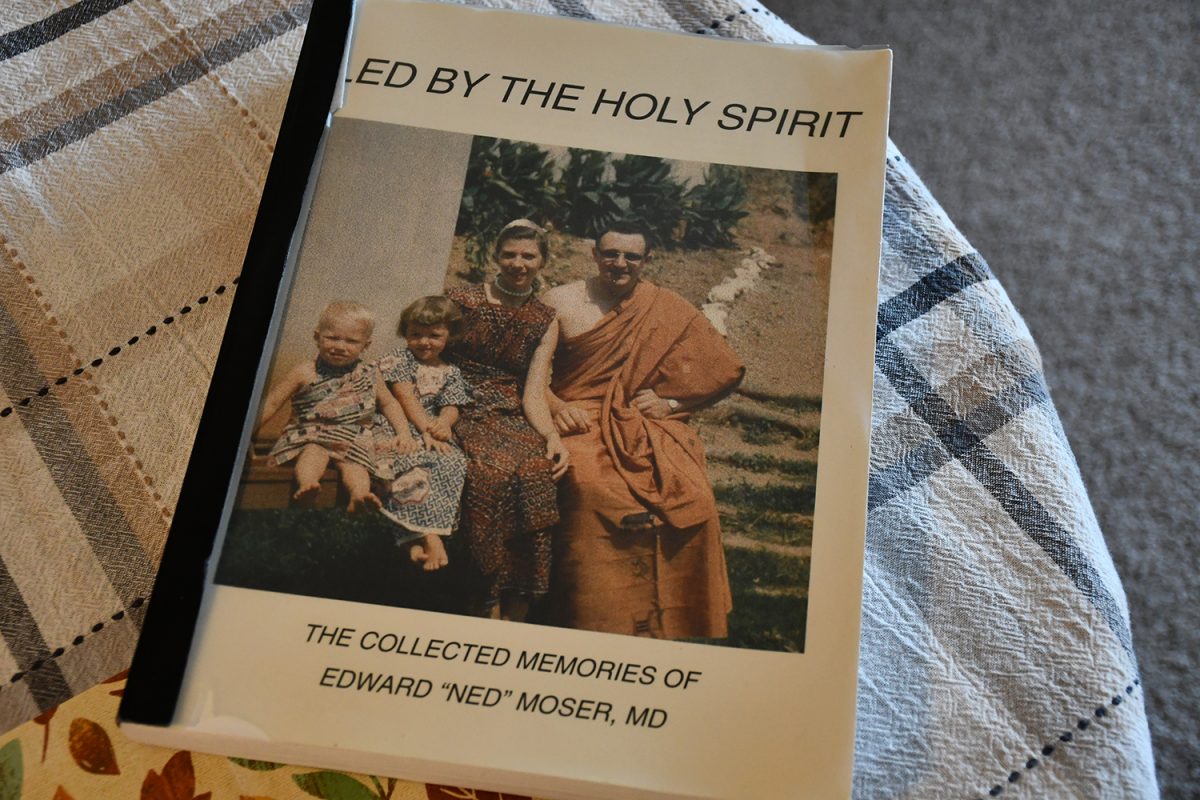
Ned wrote a comprehensive 300+ page book detailing the major events of his and his family’s lives. It includes his time spent in Africa and is written in chronological order. The book is a reference point for the family to look back on their lives and smile. Cherished stories fill every page.
Alice and Ned continued their missionary work in the following years. At one time, they housed an international student, Hilary Eloni, who they now consider part of the family. Alice lovingly remembers bringing Eloni home for the first time. He looked around at his new room, turned to Alice, and said, “Is this all for me?” He had been used to cramming into small sleeping quarters with his peers back in Africa.
Missing the tropical climate, Alice and Ned moved to Florida later in life, where their son had been living. When Ned suffered a stroke, the couple decided it was time to look for a more long-term solution for both of them.
Their daughter, who was still living in Pennsylvania at the time, suggested Phoebe. She sent Alice pictures of The Terrace via text, and they decided it was a good fit for them.
When Alice and Ned arrived at Phoebe Allentown for the first time, they were suddenly sure of their future.
“We’re both outdoor people,” says Alice. “When we saw our balcony for the first time, we fell in love. This is the place God wanted us to be.” The view from their balcony overlooks J. Birney Crum Stadium, where Alice will catch the occasional sports or marching band performance.
“I love it. I would highly recommend [The Terrace] to anybody,” says Alice. “There is a lot of activity and enjoyment. I’ve made wonderful memories to hold on to here.”
Unfortunately, just three months after moving into Phoebe Allentown, Ned passed away. With an admirable and caring legacy behind him and a large portion of his life recorded in his autobiography, his memory lives on for Alice to cherish and for us to learn about.
Ned’s book resides on a coffee table with an early family picture on the cover.
To learn more about Phoebe Allentown, please visit phoebe.org/allentown/.
Written by Dominic Trabosci