

Teachers are among the most formative figures in our lives. We look up to them as role models and we take from them a wealth of knowledge that we use for years to come. In some cases, teachers can be advocates for who we are and who we want to become.
This is true of former teacher Nancy Ruhmel, now a resident of The Terrace at Phoebe Allentown. Ruhmel spent decades teaching and advocating for students with various mental and physical disabilities.
Growing up in Ephrata, PA, a small community dominated by farmland and the town where she would graduate high school, Ruhmel lived with her three older brothers. She and her siblings were tightly knit, and Ruhmel loyally followed them despite the occasionally mischievous act.
Ruhmel’s parents divorced when she was nine years old, resulting in her and her brothers having to help make ends meet. Working for the family came naturally to Ruhmel despite her young age, explaining that it was simply the “way it was.” She says that it was common for the children of farming families to help with the land.
Ruhmel would babysit and assist her mother in cleaning houses or doing laundry work in the community.
By ninth grade, Ruhmel got a desk job for a television repair service, just as televisions were gaining popularity across the country. At 15 years old, she worked at the soda fountain at a local drugstore. If she was quick enough, she could squeeze in a short shift and make some tips during her school lunch break.
Without her father, Ruhmel gained increased admiration for her mother for having the strength to raise Ruhmel and her three siblings while also balancing factory jobs. Like Ruhmel, her mother highly valued education and instilled the values of hard work and dedication in Ruhmel, something she continues to live by.
“You just make the best of life and do what you can do,” says Ruhmel.
Since she was a child, Ruhmel had her sights set on teaching. She fostered a deep love of her teachers and often saw herself in that role.
When Ruhmel approached her mother about wanting to go to school to become a teacher, her mother explained that it would be incredibly difficult to afford in their current situation.
“I’ll find a way,” said Ruhmel.
Sure enough, Ruhmel’s excellent performance in high school awarded her some much-needed scholarships to attend college. She enrolled at nearby Millersville University for her undergraduate degree, which was in elementary education with a minor in special education.
At the time, talks of what can be done for disabled students were taking off. Up until that point, children were largely denied a spot in schools if they were handicapped due to a lack of resources to address their unique needs. After graduation from Millersville, Ruhmel decided to pursue her Master’s Degree in Special Education at Temple University.
Ruhmel hit the ground running when it came to teaching. Her first job was with Garden Spot School District in Lancaster County. She began with a class of 18 kids (made up of 6th and 7th graders) that were classified as “special ed.”
Ruhmel took issue with that label, however. She asserts that the abilities of the students she taught extended far beyond mental disabilities. Still, Ruhmel was responsible for teaching children who had disabilities, whether physical or mental.
“They haven’t had much chance to have an education,” says Ruhmel. She aimed to provide a caring and complete education for this vulnerable demographic.
She taught in Lancaster for a year and a half before moving to Allentown due to her husband’s job. She initially taught at a school with a large African-American population, where many of the students hadn’t been exposed to quality education.
She then taught at Hiram W. Dodd Elementary School, once again teaching to children with disabilities. She spent several years working here and loved every minute of it. Ruhmel taught everything from music to reading. Students here had access to physical therapists to help them cope with their physical hurdles.
While Ruhmel was glad to be able to give these students a proper education, she was also aware of the social barriers that arose by separating her students from the rest of the student body. The isolation of handicapped from non-handicapped students only created a greater divide between the two.
Ruhmel decided to approach her colleagues with the idea of introducing some physically handicapped students into a traditional classroom setting. With help, Ruhmel acquired handicap-accessible desks and successfully integrated physically handicapped students into mainstream classrooms. The students ended up doing very well, with Ruhmel there to support them when needed.
To this day Ruhmel is thankful for the open-mindedness of the two teachers who helped her with integrating the first handicapped students. Moving forward, Ruhmel directly addressed the concerns and/or excuses that teachers had regarding integration.
At that time, laws were slowly being introduced to allow greater educational accessibility for students. After Ruhmel completed her Master’s Degree, she spent the next seven years bouncing between schools in and around Allentown to help introduce and reform special education classes.
Ruhmel would meet with teachers once a month to offer guidance and analyze problem areas for these classes. She would then advise the teachers on what can be improved. Ruhmel was effectively on the frontlines for introducing more inclusive classrooms in the state of Pennsylvania.
Still, Ruhmel missed the methodical work of teaching. She decided to return to a traditional teaching role at South Mountain Middle School where she worked for several years. She then did another four years at Trexler Middle School, continuing to teach students with disabilities.
Even as the retirement question started floating around in Ruhmel’s head, she decided that teaching privately would allow her to continue doing what she loved for as long as possible. After retiring, she continued to teach privately out of her own office for 31 years.
“I relished the success of my students during that time,” says Ruhmel. One of the most gratifying parts of her job was seeing her students succeed. She’s been to multiple college graduation ceremonies of students she once taught, one of whom earned a Doctor of Physical Therapy. She even attended another student’s wedding. Needless to say, Ruhmel has built flourishing relationships with her students.
“I’m so thankful I was able to fulfill my desire to become a teacher and meet the wonderful people I was able to meet,” says Ruhmel.
Content with her accomplished teaching career, Ruhmel slowly began phasing out her private students to begin searching for a retirement community. She had heard about Phoebe Allentown through some friends who lived there. She was looking for a community in the local area that wasn’t overwhelmingly large, and Phoebe fit the bill. She officially moved into The Terrace in 2021.
“It worked out for the best,” says Ruhmel. She was diagnosed with Parkinson’s disease since arriving at Phoebe, but the activities the campus provides has allowed her to manage it while continuing to live independently.
Ruhmel loves having a meal with her dinner mates, attending guest lectures, using the fitness room to stay active, and attending a local Rock Steady Boxing class. She knows the importance of staying active with Parkinson’s and holds herself to it.
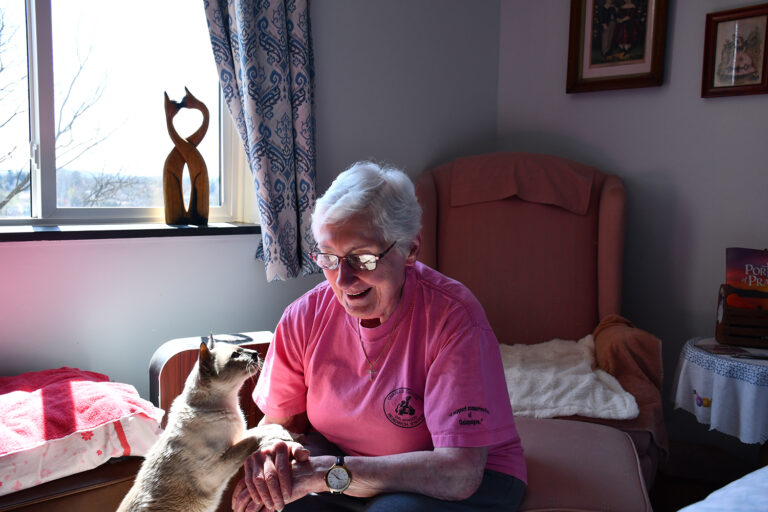
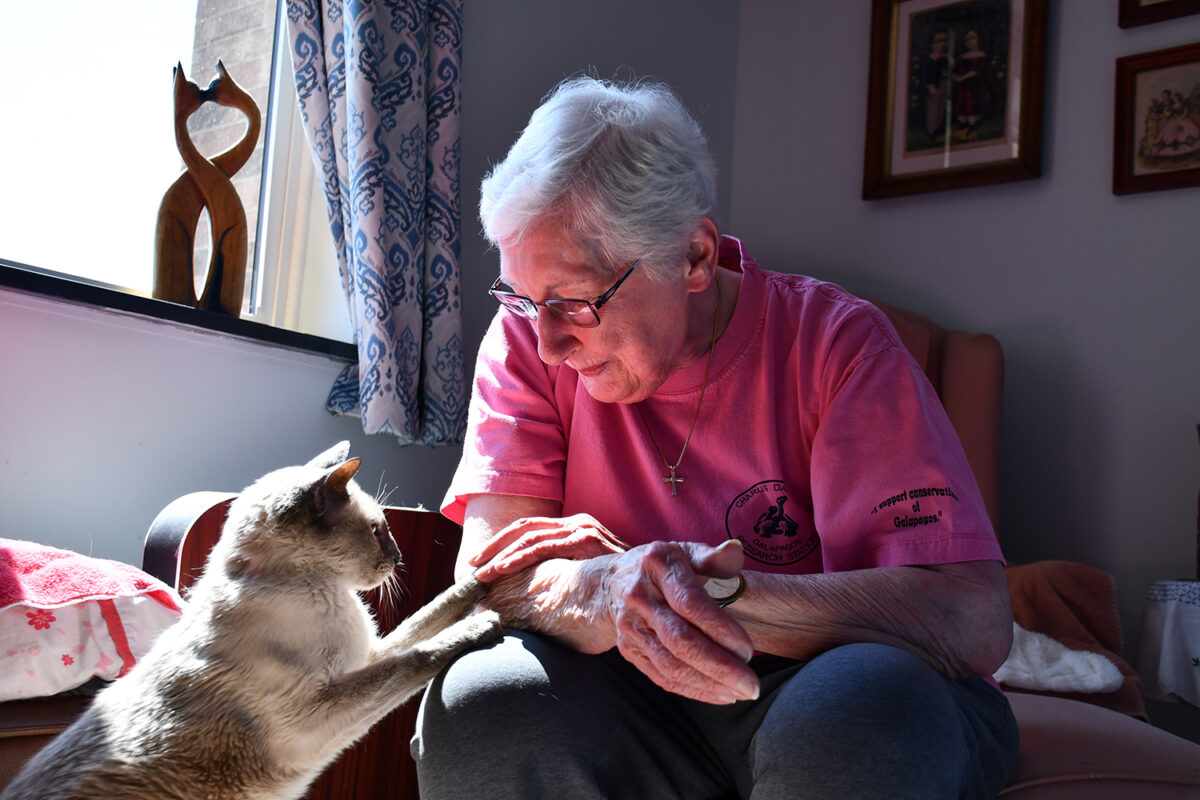
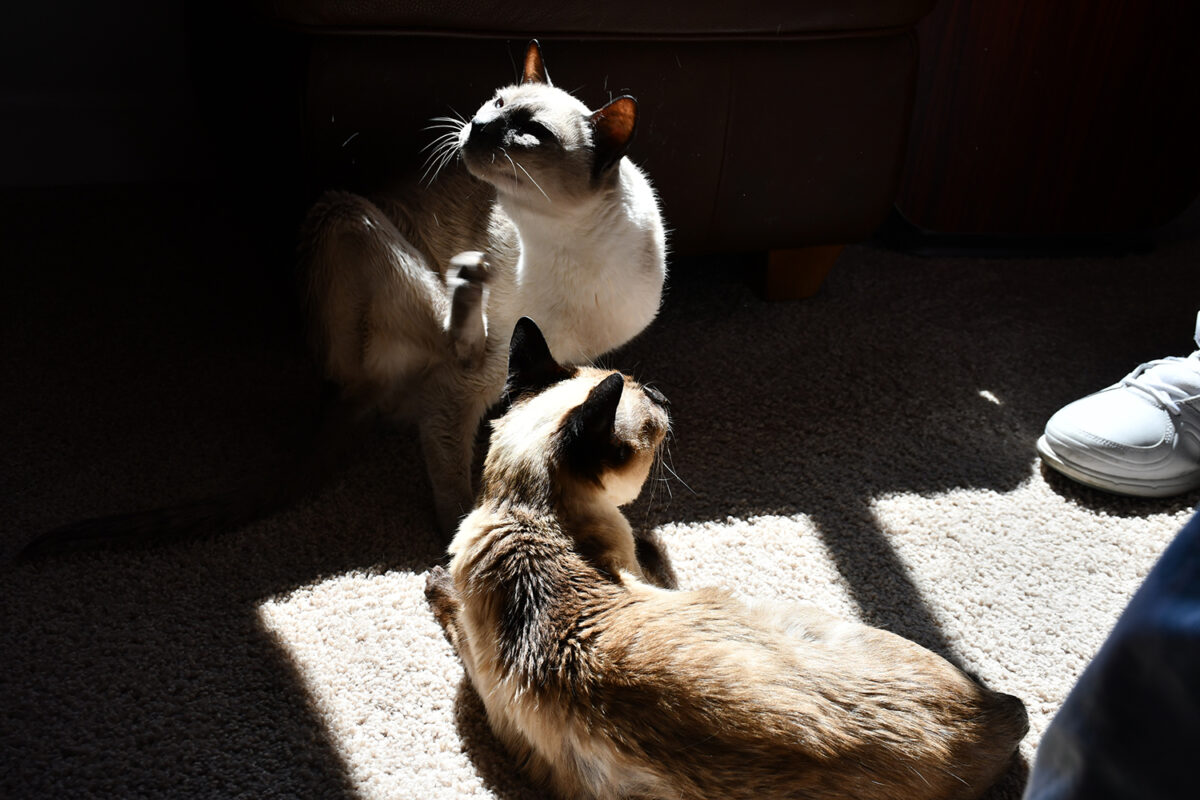
Ruhmel keeps in close contact with her family and is kept company by her two Siamese cats, Samson and Delilah, as well as her friends at Phoebe. Her husband passed away years ago, but the bond with her animals and community keeps her going.
“I’m really happy I came here. I’ve made a lot of new friends. We have a great group of people who are friendly,” says Ruhmel. “My family feels better, too, since my diagnosis.”
We are thankful to have amazing residents such as Nancy Ruhmel choose Phoebe as their place of retirement. Phoebe wishes her and every other educator across the country a Happy National Teacher’s Month. To learn more about Phoebe Allentown, please visit phoebe.org/allentown/.
Written by Dominic Trabosci